

Blog
When Game Day Ends in an Injury: Who Is Responsible at a South Carolina Tailgate?
Who may be responsible for a South Carolina tailgate injury? Learn how visitor status, property control and evidence can affect a claim.

When a lawyer, medical provider, or insurer “values” an injury case, humans usually weigh complexities: how an injury disrupted your life, its long-term effects, your pain, your family, your unique recovery path. Now, however, some insurers use algorithms—automated systems that propose settlement amounts. These AI-driven offers may appear objective and fast, but they carry serious risks of undervaluing claims and leaving victims shortchanged.
The controversy around Hertz’s AI vehicle damage scanner shows how automation can misjudge real situations. Far from being harmless tech, these systems foreshadow how algorithmic decision-making could reshape legal claims too.
Hertz recently made headlines for deploying AI scanning systems (developed by UVeye) that inspect rental cars at pickup and return—comparing high-resolution images to detect new damage and automatically bill renters. (via Car and Driver)
A few key details from public reports:
One renter was charged $440 for a small one-inch wheel scuff, including repair, processing, and administrative fees.
Another was assessed $350 after AI flagged “damage” that he says he never saw, and contacting Hertz was difficult because the chatbot system would not hand the case over to a human initially.
Critics say the AI sometimes misinterprets reflections, lighting, shadows, dirt, or water spots as damage, and the system lacks transparency.
Hertz claims fewer than 3% of scanned vehicles receive damage assessments.
This Hertz case is not just about cars — it highlights how automated systems that generate financial penalties or valuations can err, and how difficult it can be for consumers to reverse or contest decisions made by AI.
That same dynamic is emerging in personal injury claims, where an algorithmic settlement offer might undervalue your pain and damages—and make it harder for you to present your full story.
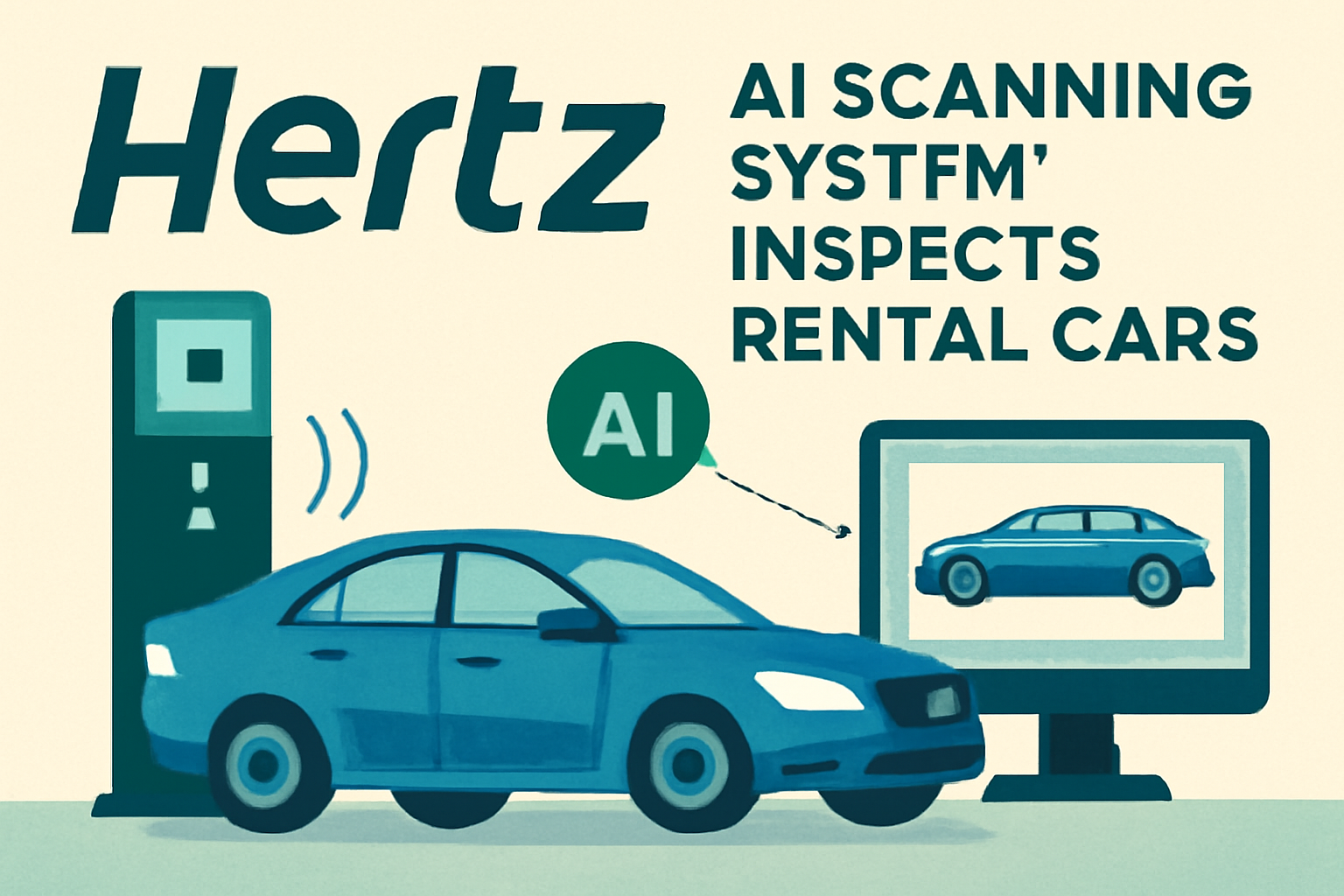
Instead of a human adjuster or claims examiner reviewing every bit of evidence, an AI model may ingest medical records, cost estimates, historical claim data, and algorithms that weigh those factors to produce a dollar amount. That number is sent—often quickly—as a “final offer” or baseline.
This kind of automation is attractive to insurers because it:
Reduces labor costs
Increases speed and volume
Standardizes valuations
Reduces human “unpredictability”
But speed and standardization come at a cost.
Built on Biased or Incomplete Data
If the training data includes many low settlements (especially for marginalized groups or less severe claims), the AI “learns” those as norms. That perpetuates undervaluation.
Overlooking the Human Story
Algorithms struggle to capture subtle but real losses: diminished quality of life, emotional trauma, reduced enjoyment of hobbies, or strain on relationships.
Flattening Variation
Two people with the same medical code might have wildly different recoveries or life impacts. Algorithms tend to treat them as the same.
Opaque Reasoning
If you ask “how did you arrive at this figure?” the system may not offer a transparent explanation. That limits your ability to rebut or challenge it.
Pressure Tactics via Speed
Instant offers create a perception: “This is the only number you’ll get.” There’s psychological pressure to accept before evidence of further injuries emerges.
Limited Oversight
Some insurers claim human review is part of the system, but in practice, those human checks may be cursory—rubber stamps rather than meaningful re-evaluation.
While there is not yet a South Carolina law directly regulating algorithmic settlement offers in personal injury cases, there are signs of growing concern over AI in decision-making in related areas:
A recent South Carolina bill (Bill 443) would require that any automated decision about health insurance coverage must be supervised by a licensed physician and cannot rely solely on AI. Proffitt Cox
The South Carolina Supreme Court’s Chief Justice has issued interim guidance restricting judges and court employees from using generative AI in place of legal or judicial analysis. Proffitt Cox
These moves send a message: institutions in South Carolina are beginning to push back against giving unfettered decision-making power to algorithms. In the insurance context, that matters, because it suggests a trend toward accountability and oversight.
For someone injured in South Carolina, facing an algorithmic settlement offer means dealing with a system designed by the insurer—not a neutral or patient-centered process. That’s where an experienced SC attorney becomes essential.
When an insurer deploys algorithmic offers, the playing field becomes even more tilted. Here’s how a skilled attorney from Proffitt & Cox, LLP helps level it:
Adding the Human Dimension
A lawyer can contextualize your medical, personal, and emotional losses—making sure none of the real-life impacts get overlooked by the algorithm.
Challenging the Model
Your attorney can demand disclosure of the algorithm’s inputs, assumptions, and reasoning. They can question whether it properly weighed your unique circumstances.
Pushing for Meaningful Human Review
If an insurer claims human oversight, your lawyer can ensure that oversight isn’t just a formality but a substantive check.
Negotiation and Leverage
Even if an offer is algorithmically generated, the lawyer can negotiate, counteroffer, or force escalation to a decisionmaker who must justify deviations from the algorithmic baseline.
Transparency and Discovery
In litigation or in threats thereof, the attorney can seek discovery of internal valuation models or data influencing the offer.
Protecting Your Rights
A lawyer will guard against clauses in early offers that try to limit your future rights. They also know when to refuse lowball offers.
Note: This is general guidance, not legal advice. Always rely on your attorney’s strategy in your particular case.
Did the insurer issue a “best offer” almost immediately?
Did they provide detailed rationale, data, or component calculations?
Does the offer come with a tight deadline or “decay” clause (discounts if you pay fast)?
Did they rely on medical codes or automated summaries without inviting your full narrative?
Ask: Was this offer generated by an algorithm or AI? If so, request all supporting data or assumptions.
Do not sign or accept anything until your lawyer reviews it.
Algorithmic settlement offers are not neutral or benevolent. They are tools engineered—by insurers—to control cost and limit unpredictability. Unfortunately, they often undervalue the true human cost of injury. The Hertz AI scanner controversy demonstrates how automated systems can misjudge and penalize individuals unfairly. When such logic is applied to personal injury claims, the stakes grow dramatically.
In South Carolina, technological oversight is slowly advancing in related sectors, but in injury claims, the insurer often controls the algorithm. A skilled attorney is your necessary counterbalance—arguing for nuance, fairness, and transparency in cases where computers try to make your value.
If you or someone you love has been injured and you’ve received or fear an algorithmic settlement offer, contact Proffitt & Cox, LLP in Columbia. Let experienced personal injury attorneys ensure your case is valued as more than a number. Visit our Contact Page to schedule a free consultation.
Who may be responsible for a South Carolina tailgate injury? Learn how visitor status, property control and evidence can affect a claim.

A crash involving an Uber, Lyft, or another app-based ride can look like an ordinary car accident at first. Coverage may depend on what the driver was doing in the app at the moment of the collision.

Road construction is meant to make travel safer in the long run. In the short term, however, work zones can create sudden lane shifts, narrowed
Contingency fees are calculated based upon the gross amount recovered. Case costs paid by the firm are also reimbursed to the firm from the amount recovered. In most cases, the client will not be responsible for case costs if there is no recovery. Our agreement regarding fees and expenses applicable to your specific case will be provided in writing.
Any result our lawyers may have achieved on behalf of clients in other matters does not necessarily indicate similar results can be obtained for other clients. Each case must stand on its own merit based upon the facts and the law. Some cases referenced were handled by our attorneys while working at other firms, and in some cases, other lawyers participated in the representation of a client.

Over 50 Years of Combined Experience Serving The Midlands and The People of South Carolina. Get In Touch Today For a Free Consultation.