AI-generated editorial illustration; fictional scene.
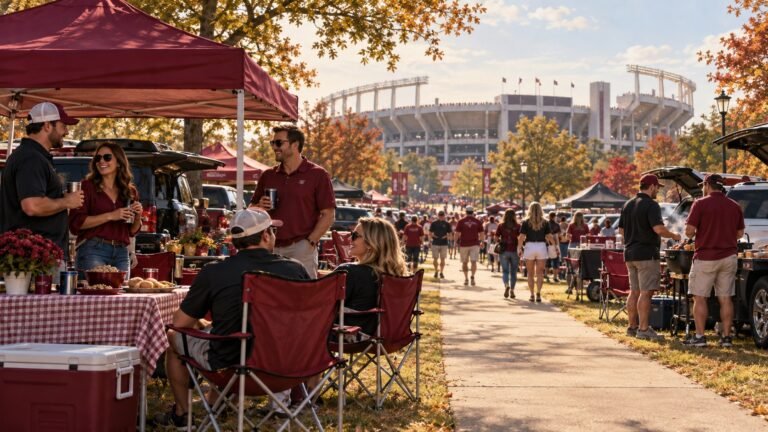
A Gamecocks Saturday can take you across several properties before you reach Williams-Brice Stadium. You park in a paid lot, stop at a friend’s tailgate, cross a sidewalk and head toward the gates. Along the way, you may pass through areas managed by several different people or businesses.
After an injury, figuring out where it happened is an early part of figuring out who may be responsible. The person collecting parking money may be renting the land. The friend who brought the grill may have no connection to the company running the lot.
Imagine a fan tripping over a cable stretched across a walkway. In the next parking space, a gust sends a canopy flying. A few rows away, a driver backs into someone walking between cars. Each situation calls for different questions about what happened and who could have prevented it.
Why your reason for being on the property matters
South Carolina law uses several categories to describe people who enter someone else’s property. For most adult visitors, the starting points are invitee, licensee and trespasser. Children can raise additional rules. These categories help determine the level of care a property owner or the person controlling the property owes a visitor. Lawyers call that responsibility a “duty of care.”
The names can be confusing. A friend who personally invites you to a cookout may be hosting a licensee. A business that has never met you may owe you the duties owed to an invitee. The reason for the visit carries more weight than the everyday meaning of the word “invited.”
Invitees: customers and people entering for a public invitation
A business visitor is one type of invitee. This usually means someone whose visit is connected with business dealings involving the person who controls the property. A fan paying to park in a commercial lot is a useful example. The lot operator offers parking, and the fan enters to use that service.
Another type is a public invitee: someone entering property held open to the public, for the purpose the public was invited to use it. Payment is therefore only part of the picture. An invitation can arise from how the property is being used, even without a personal conversation with its owner.
The general duty to an invitee is reasonable care for the visitor’s safety. That includes addressing hidden dangers the person responsible for the property knows about or should know about. Depending on the circumstances, reasonable care may require fixing a condition, giving an adequate warning or taking other steps to protect visitors.
Suppose a parking business runs an electrical cable across the route it directs customers to walk. A review would ask how the cable was placed, whether people could see it and what the business did to help them cross safely. The operator’s own setup would be an important part of that investigation.
Licensees: social guests and other people there with permission
A licensee has permission to be on the property, often for a social visit or the visitor’s own purposes. An ordinary guest at a friend’s backyard tailgate generally falls in this category, even if the friend sent an enthusiastic invitation. The word “licensee” does not mean the guest needs a license, permit or written form.
The host’s duties are narrower than a business’s duties to its customers. A host generally does not have to inspect and prepare the property for a social guest in the same way a business must use reasonable care for invitees. The host does have duties concerning concealed dangers the host knows about, certain dangerous changes the host can reasonably be expected to discover, and reasonable care while carrying on activities around guests.
For example, suppose your friend knows a deck board has rotted through, but a rug hides the damage. Whether your friend warned you would matter. If the injury involved the host moving a hot grill while guests stood nearby, the investigation would also consider how the host handled that activity.
The same yard can be used for different purposes. If the homeowner sells game-day parking spaces to the public, a paying customer’s visit may involve a business relationship. To sort that out, an attorney would ask why you were there, what you paid for and where you were expected to go.
Trespassers: people there without permission or a legal right
A trespasser enters or stays on someone else’s land without permission or a legal right to be there. Think of an adult climbing a closed fence to take a shortcut to the stadium, assuming there was no permission or other right to cross.
South Carolina’s Trespasser Responsibility Act generally limits the duty owed to a trespasser to refraining from causing a “wilful or wanton” injury. This is a much narrower protection than the reasonable-care duty owed to a customer. Questions about permission, including whether the owner’s conduct showed permission, therefore deserve careful attention.
The statute also contains an exception for children and people with an intellectual disability who are injured by certain artificial, or human-made, conditions. All five requirements must be met:
- The person controlling the property knows, or has reason to know, that children or people with an intellectual disability are likely to trespass in that area.
- That person knows, or has reason to know, about the condition and realizes, or should realize, that it creates an unreasonable risk of death or serious bodily harm.
- Because of youth or intellectual disability, the injured person does not discover the condition or understand the risk.
- The value of keeping the condition and the burden of removing the danger are small compared with the risk to those children or people with an intellectual disability.
- The person controlling the property fails to use reasonable care to remove the danger or otherwise protect them.
These requirements give an attorney specific questions to investigate when a child is hurt after entering property without permission.
Find out who controlled the area where you were hurt
Once you understand why you were on the property, the next question is who was responsible for the particular area or activity. A landowner, parking operator, tenant and tailgate host may have different roles. A receipt, reservation email or photograph of the entrance sign can help identify them.
For a walkway injury, useful questions include who maintained the surface, who placed anything across it, and who had authority to repair a problem or put up a warning. For an injury involving someone’s personal equipment, start with the person who brought and used it.
University or other government-controlled property requires another step. A claim against a public entity may come under the South Carolina Tort Claims Act. That law sets rules about when a public entity can be sued, the procedures for bringing a claim and limits on recovery. An attorney needs to identify the public entity and the conduct involved before applying those rules.
Land made available for recreation without charge can also raise South Carolina’s recreational-use law. That statute limits some landowner duties and contains exceptions, including certain charges for recreational entry and grossly negligent, willful or malicious failures to guard or warn. To decide whether it applies, an attorney would examine the activity and exactly what any payment covered. A parking charge and an admission charge may require different analysis.
What the person responsible knew about a hazard
After a slip on spilled liquid, details that seemed unimportant before the fall can become useful evidence. Someone may have seen a worker walk past the spill. A video may show when it happened. Another customer may remember reporting it.
In Wintersteen v. Food Lion, the South Carolina Supreme Court considered a grocery-store spill. The injured customer needed evidence that the business created the dangerous condition or had actual or constructive notice of it. “Actual notice” means the business knew about it. “Constructive notice” means the evidence supports treating the business as having knowledge because the condition should have been discovered.
That helps explain why timing matters in a similar game-day spill. A drink spilled moments before someone falls presents different evidence from a spill that remained in a busy walkway long enough that it should have been found. A cable laid by the parking operator points to the operator’s own conduct. An old depression in a walking surface may call for maintenance records and photographs showing its condition over time.
Save what you can while the scene is still recognizable. Crowds move, spilled drinks dry and equipment gets packed into cars, but with a smartphone in your pocket, you or a loved one should document the scene as much as possible.
Grills, canopies and vehicles need their own investigation
For a burn or canopy injury, identify who brought the equipment, who assembled or operated it and what happened just before someone was hurt. Photographs of a canopy’s setup, the manufacturer’s instructions and witness accounts may help explain how it came loose. If a product failed, keep it in its existing condition so the failure can be examined.
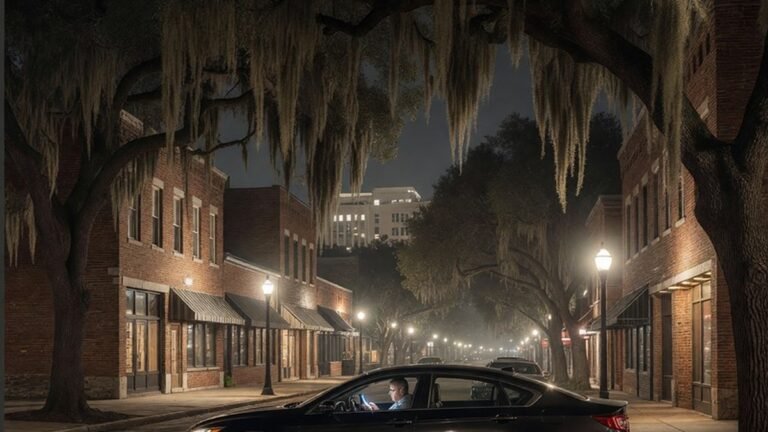
For a vehicle collision, record the driver and vehicle information, the direction of travel, the lighting and any signs or instructions controlling traffic. A driver’s actions may be central to the claim. The layout of the lot and the parking operator’s responsibilities may also need review.
Across these situations, a legal claim requires a connection between someone’s responsibility, a failure to meet it and the harm that followed. Identifying who was nearby is only the beginning of that work.
Check this season’s game-day routes
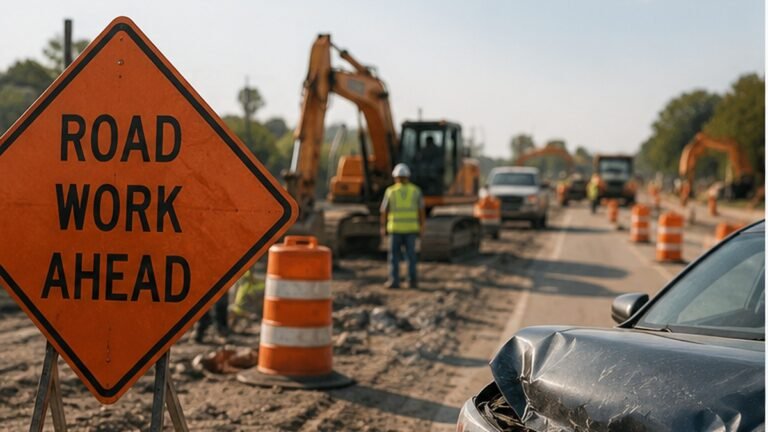
Gamecock Athletics’ August 12, 2026, logistics announcement describes changes around Williams-Brice Stadium, including vehicle and pedestrian movement near George Rogers Boulevard, designated ticket-entry gates and restrictions related to construction. Check the university’s current instructions and follow directions at the site when planning your route.
If you are injured, keep a copy of the instructions you used and photograph the signs that were in place. Those records can help explain where you were walking and why you took that route.
What to save after an injury
Get medical care first. When it is safe to gather information, save:
- The exact location: lot name, address, entrance and a nearby fixed landmark.
- Wide photographs of the area and close photographs of the hazard or equipment.
- Parking receipts, reservations, tickets and the terms accepted when paying.
- Witness names and contact information.
- The name of anyone who took an incident report, along with a copy or report number if available.
- Original photos and videos with timestamps.
- Medical records, receipts for related expenses and a record of missed work.
Report the incident promptly. Camera recordings and other records may need a separate request to preserve them; an attorney can help determine what to request and from whom.
Ask about filing deadlines early
Many South Carolina personal-injury claims have a three-year filing period. Discovery rules and exceptions can affect when that period begins or ends. Claims under the Tort Claims Act generally have a two-year period, which can be affected by filing a qualifying statutory claim first.
An incident report serves a different purpose from a lawsuit or the formal claim described in the statute. Tell the attorney what you reported, to whom and when, and ask for the deadline that applies to your situation.
Contact Proffitt & Cox in Columbia to discuss a South Carolina tailgate injury. Bring the photographs and paperwork you have, even if you are still unsure who owned the lot or what caused the accident. Those records give the review a place to start.
This article provides general South Carolina legal information. An attorney can advise you about your particular circumstances. Hypothetical examples do not describe allegations against any named venue or organization.